Draft v0.1
The AI Interaction Lifecycle
Modern AI experiences can range from simple conversational interactions to fully autonomous agents capable of completing multi-step tasks. Regardless of the level of autonomy, AI interactions often follow a common lifecycle that guides users from expressing intent to achieving an outcome.
The AI Interaction Lifecycle defines six stages that support both informational and agentic experiences:
Each stage represents a distinct phase in the interaction between a user and an AI system, from defining a goal to reviewing the final outcome.
The Six Stages at a Glance
| Stage | Primary Question | Actions Taken |
|---|---|---|
1. Express Intent |
What does the user want? | The user communicates a goal, question, or request. |
2. Display Results |
What did the AI produce? | The AI presents generated outputs, recommendations, explanations, and supporting information. |
3. Refine Output |
How does the user improve the result? | The user iteratively improves, redirects, or adjusts generated results until they meet their needs. |
4. Take Action |
What should happen next? | The AI transitions from generating information to planning and preparing actions. |
5. Execute & Monitor |
How is it being carried out? | The AI actively performs work while users monitor progress and maintain appropriate oversight. |
6. Summary |
What happened? | The AI communicates outcomes, accomplishments, decisions, supporting evidence, and recommended next steps. |
Principles Matrix
The following matrix shows which AI UX principles are most closely associated with each stage of the AI Interaction Lifecycle.
| Principle | Express Intent | Display Results | Refine Output | Take Action | Execute & Monitor | Summary |
|---|---|---|---|---|---|---|
| Control | ✓ | ✓ | ✓ | ✓ | ✓ | |
| Transparency | ✓ | ✓ | ✓ | ✓ | ||
| Human Override | ✓ | |||||
| Trust & Confidence | ✓ | ✓ | ✓ |
Lifecycles for Different AI Capabilites
Informational AI Lifecycle |
|---|
Informational AI experiences focus on helping users discover information, generate content, explore ideas, answer questions, and produce insights. Examples include:
|
These experiences typically operate within the first three stages of the lifecycle. The interaction focuses on generating, understanding, and improving information or content. 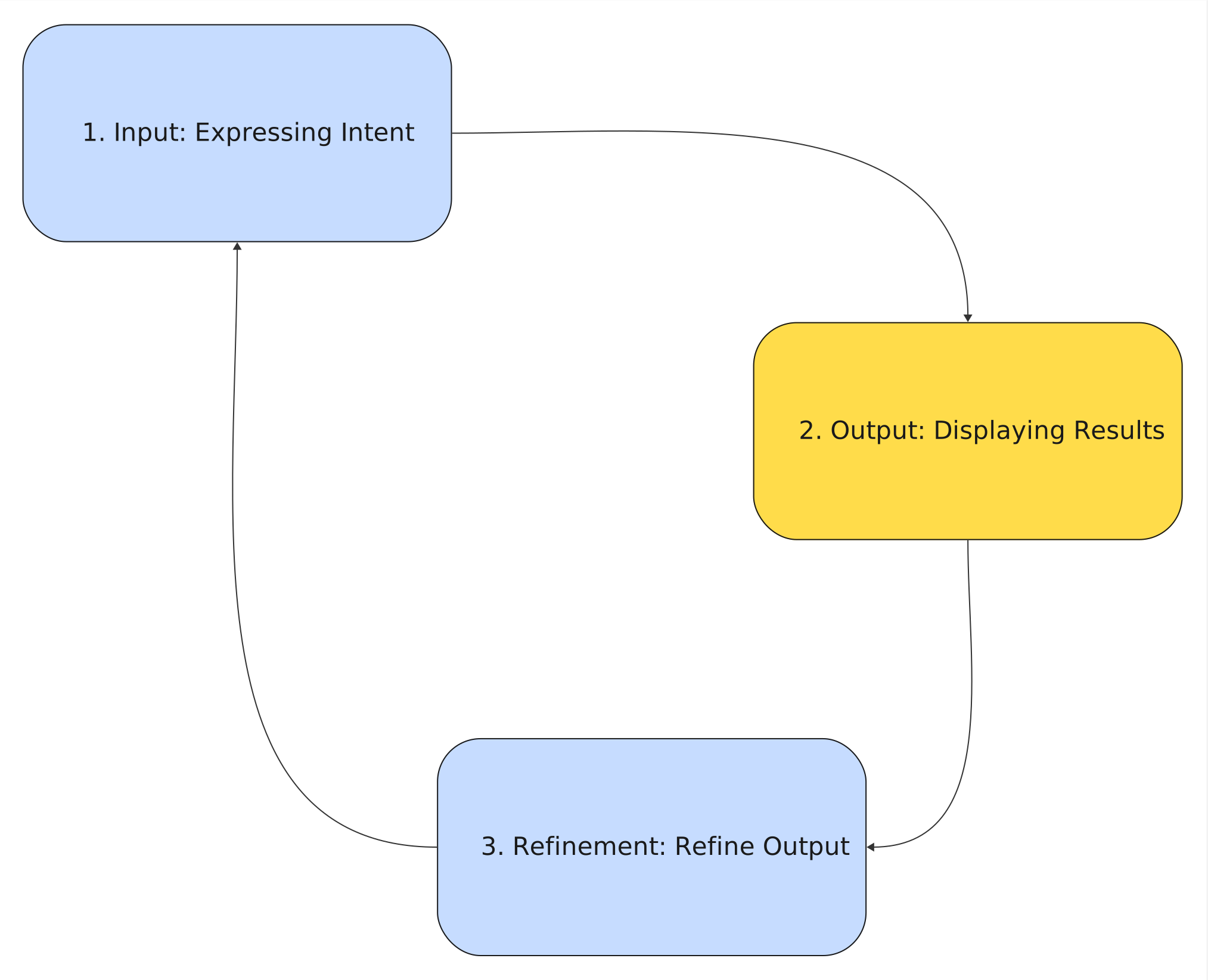 |
Agent-Assisted AI Lifecycle |
|---|
Agent-assisted experiences extend beyond information delivery and enable AI systems to plan, execute, and monitor work on a user's behalf. Examples include:
|
These experiences build upon the Informational AI Lifecycle and introduce three additional stages. The interaction expands from generating information to planning, executing, monitoring, and reporting on actions. 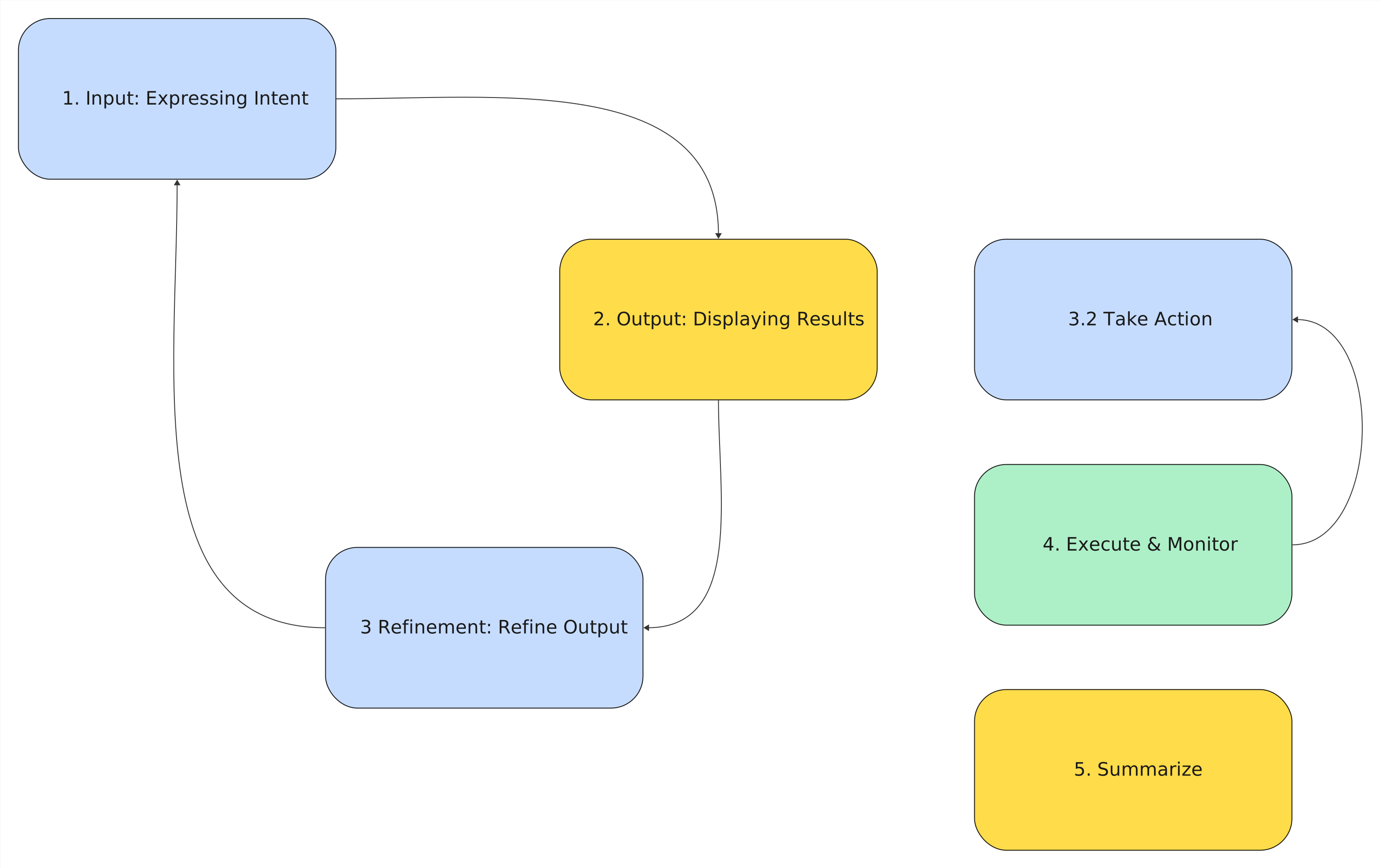 |